
level designer
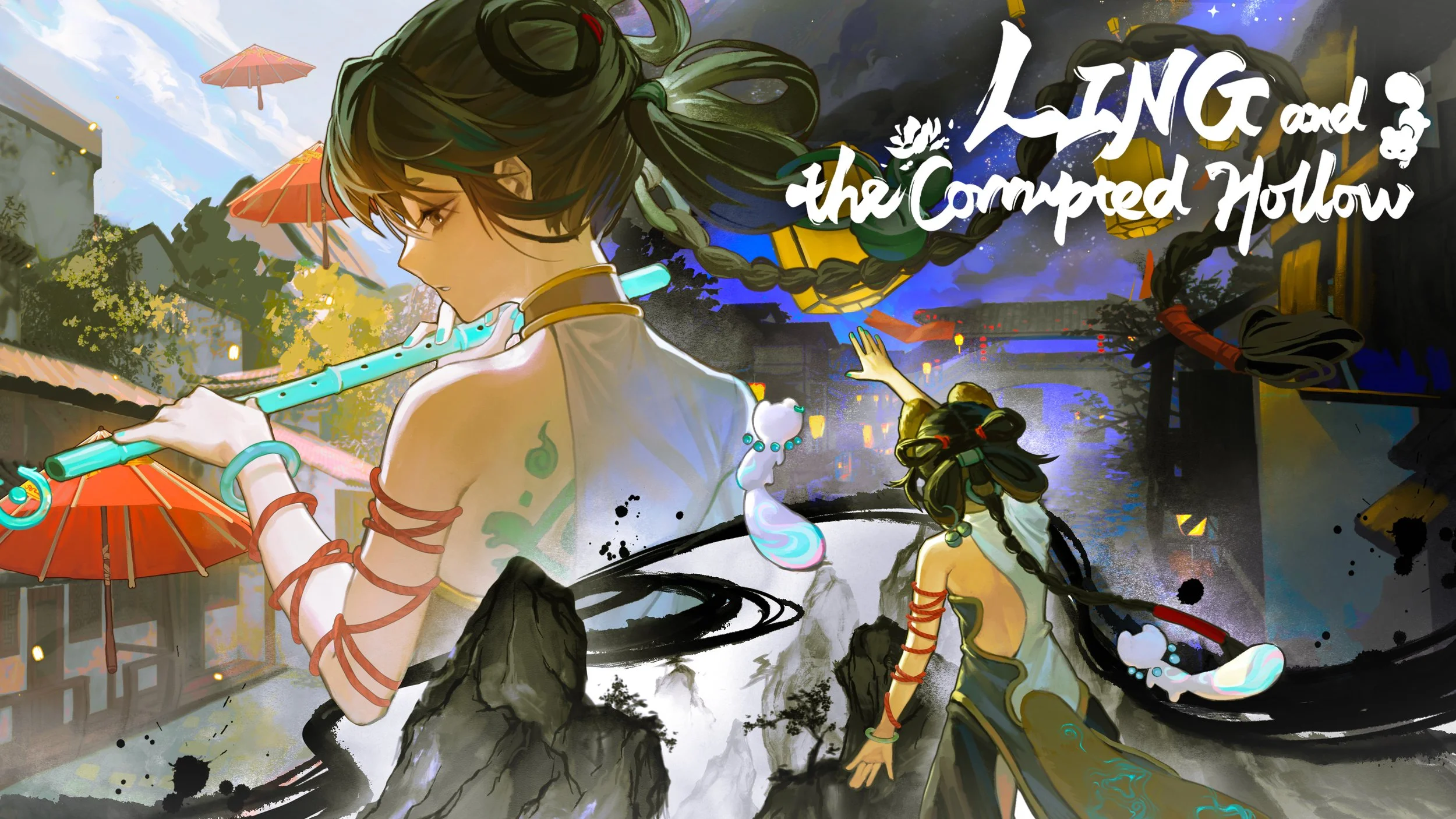
Unreal 5 | PC | singleplayer |
puzzle platformer | 27-person team
LEVEL DESIGNER


high-level design goal:
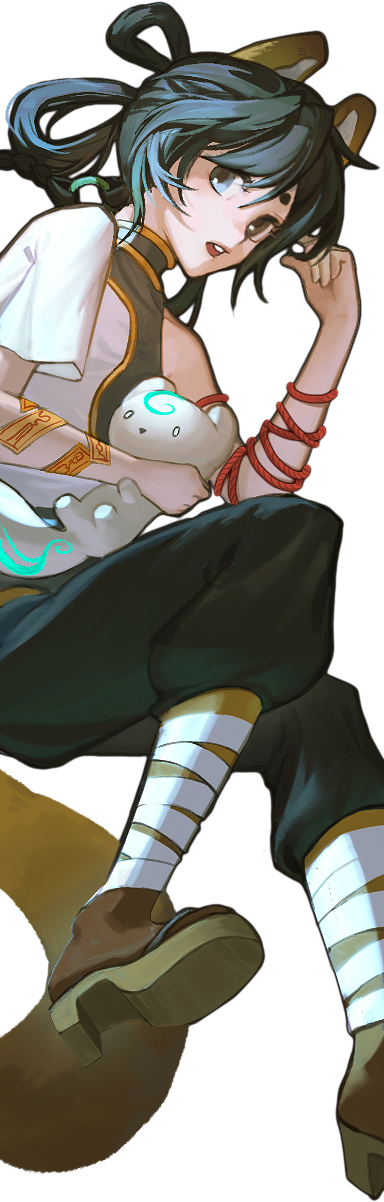
possession-based platforming
cONTRIBUTION
2 Levels
I worked on all five maps in Ling and the Corrupted Hollow but led the design of two: the tutorial and the final level, “Primordial Shrine”.
I took the maps through the entire design pipeline, from paper design to final shipped version. My work included layout planning, blockout, puzzle design and implementation, and collision.

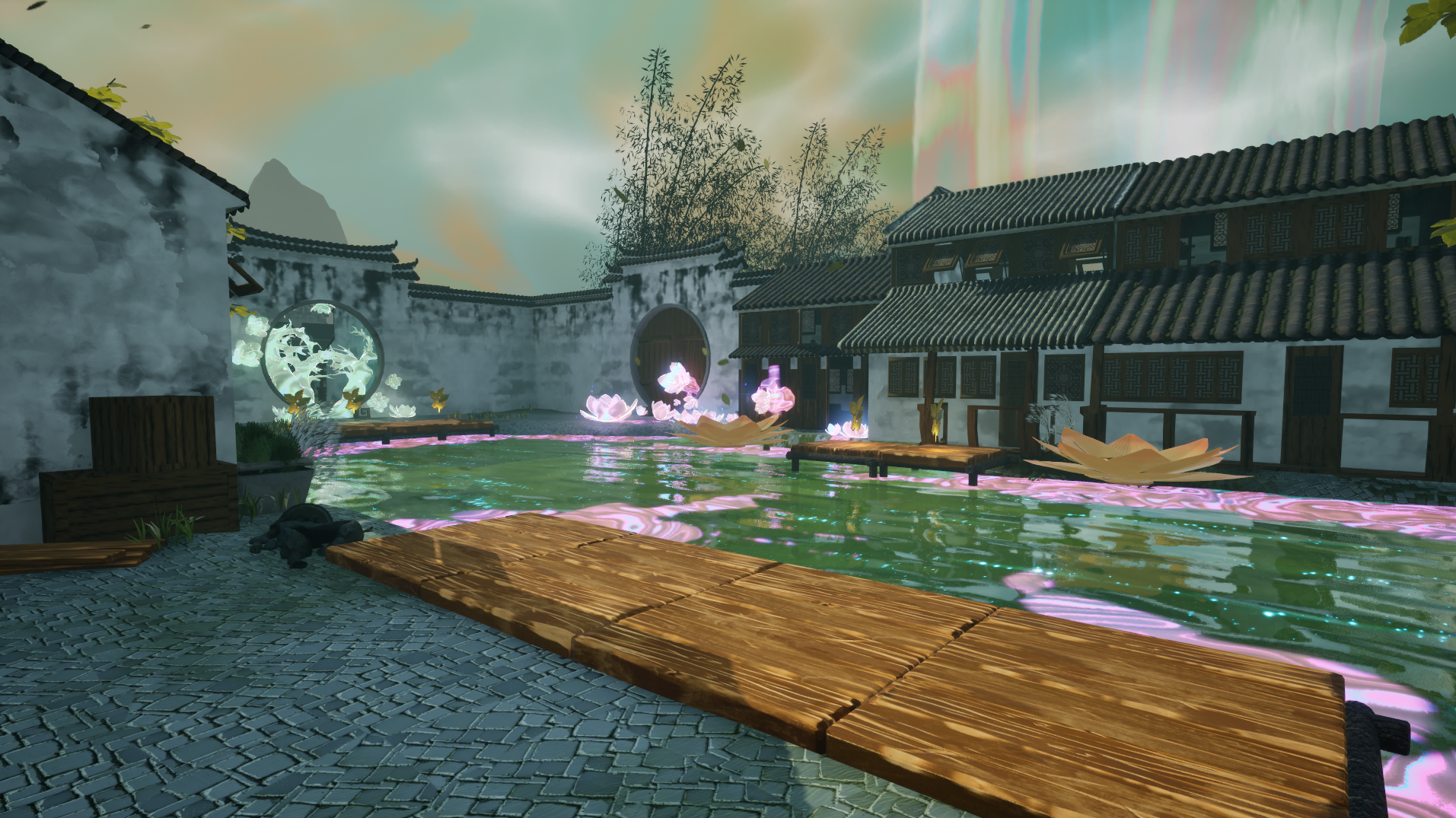
tutorial
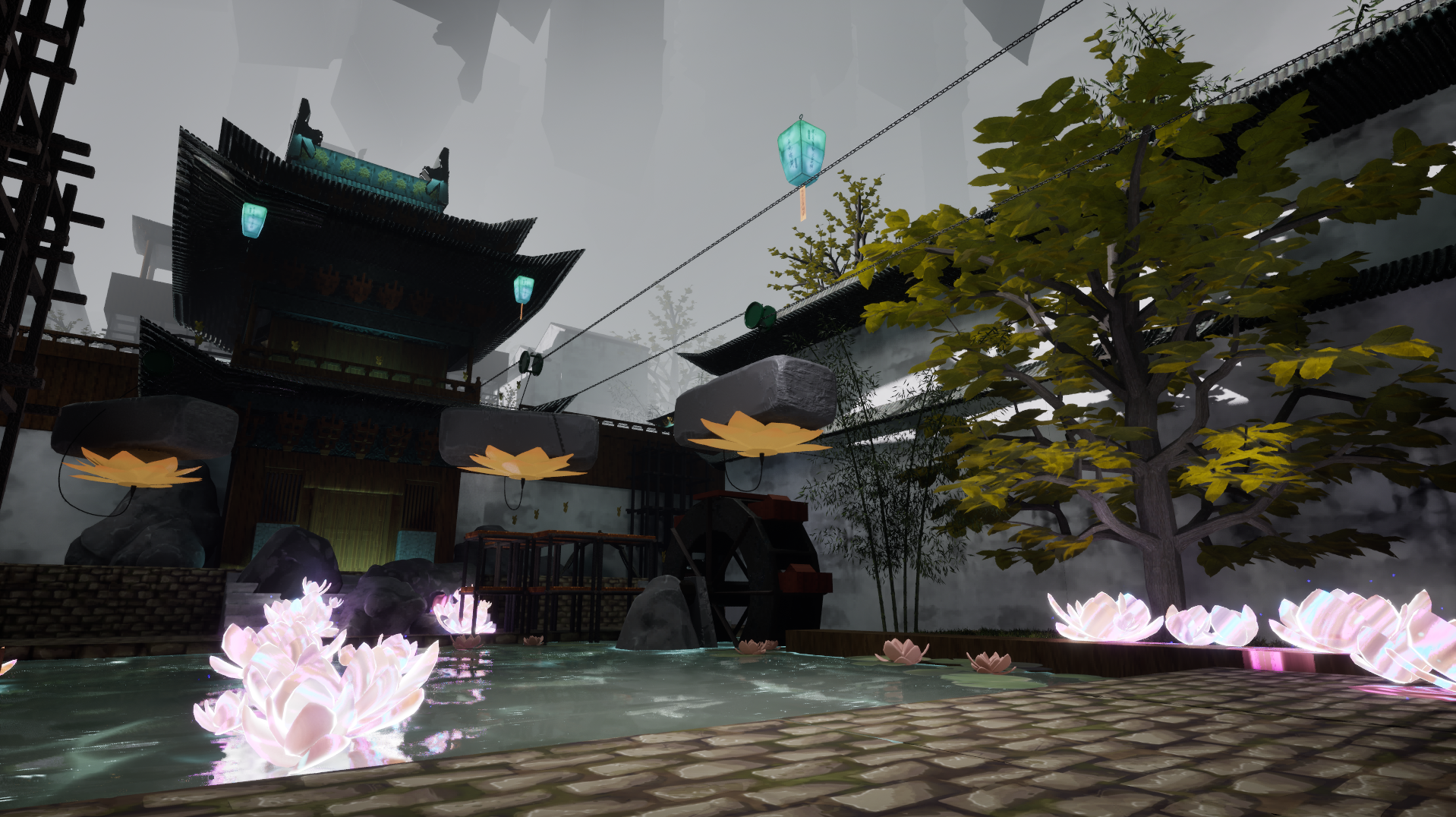
primordial shrine
DESIGNING FOR A PLATFORMER
Pacing: Good pacing is the core design principle used throughout the game. Shuffling the order of platforming and possession sections was key to creating non-repetitive and engaging gameplay.
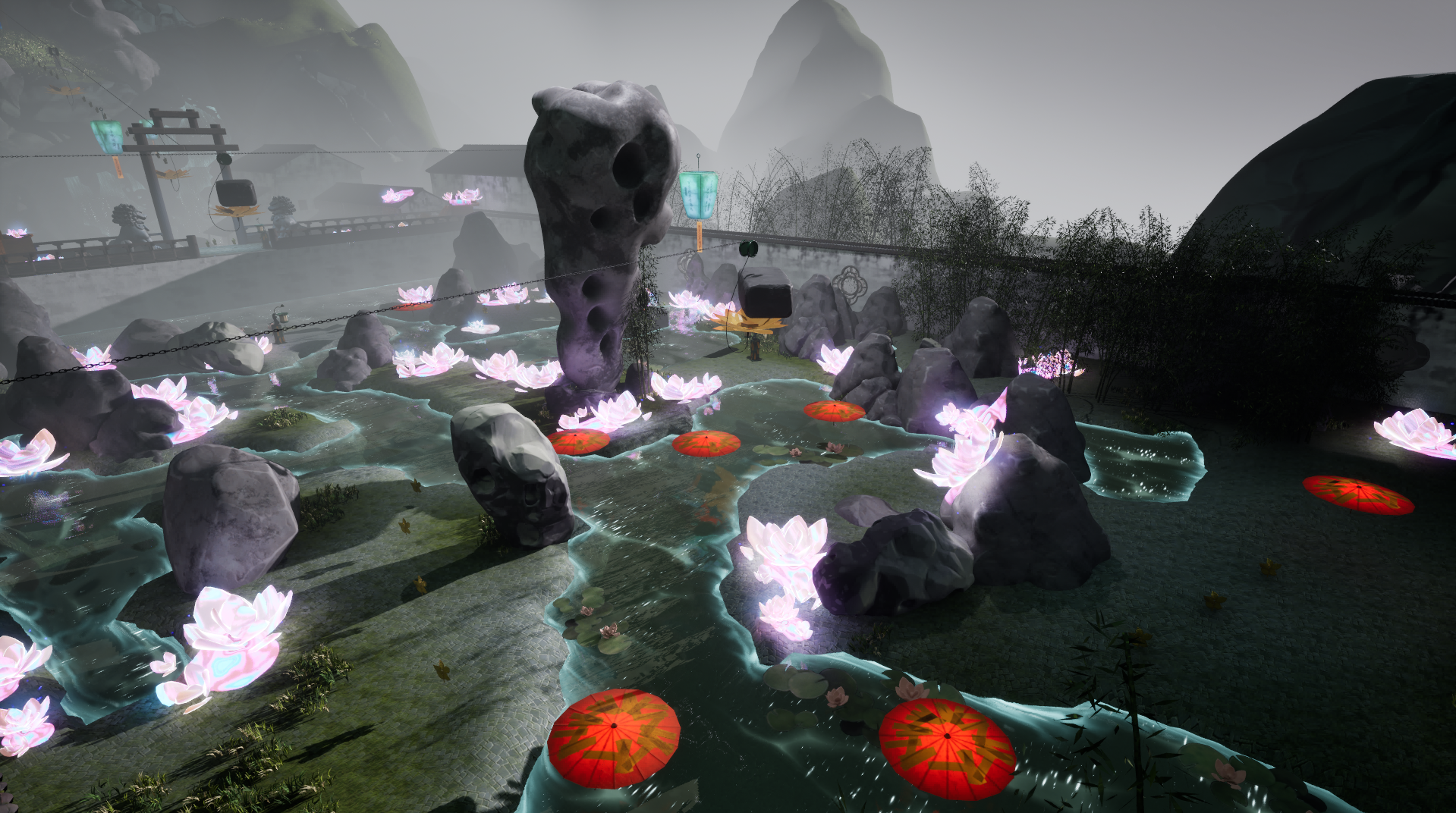
Balancing difficulty: Since touching water is lethal in Ling, it’s everywhere in the final level. We leveraged splines and terrain tools to create intentionally complex and diverse bodies of water for the player to traverse over.
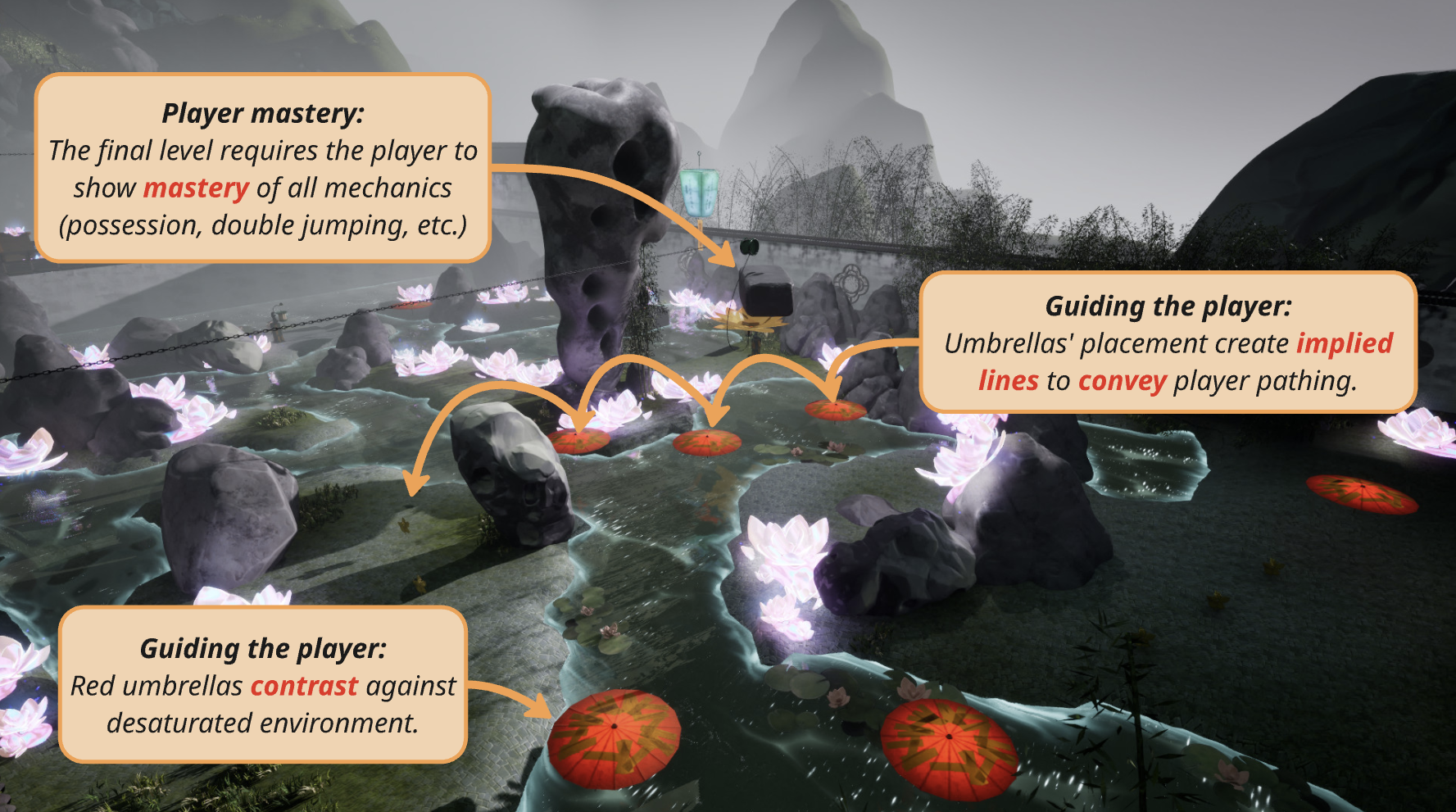
Conveyance & color: We used the bright red umbrella-platforms that dot the level to convey the intended path.
SETTING the final experience: “primordial shrine” concept
As Ling and the Corrupted Hollow is strongly inspired by traditional Chinese urbanism, the design team wanted the final level to be architecture focused. I was tasked with concepting the map’s setting.
I decided a traditional shrine would be the best candidate to support our object-possession mechanic.
The concept image on the left inspired the level’s layout, flow, pacing, and sightlines.
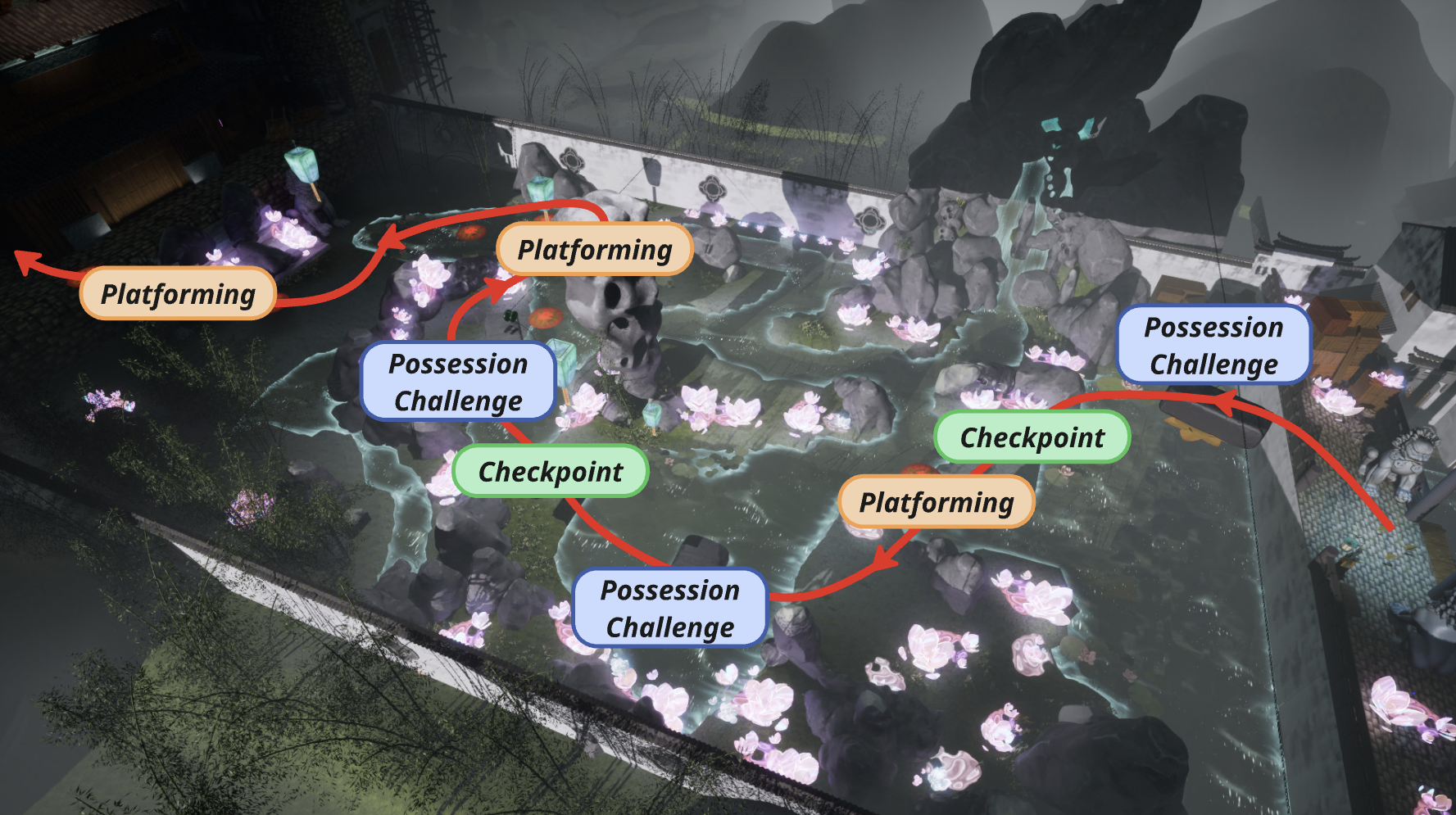
PACING
challenge & flow
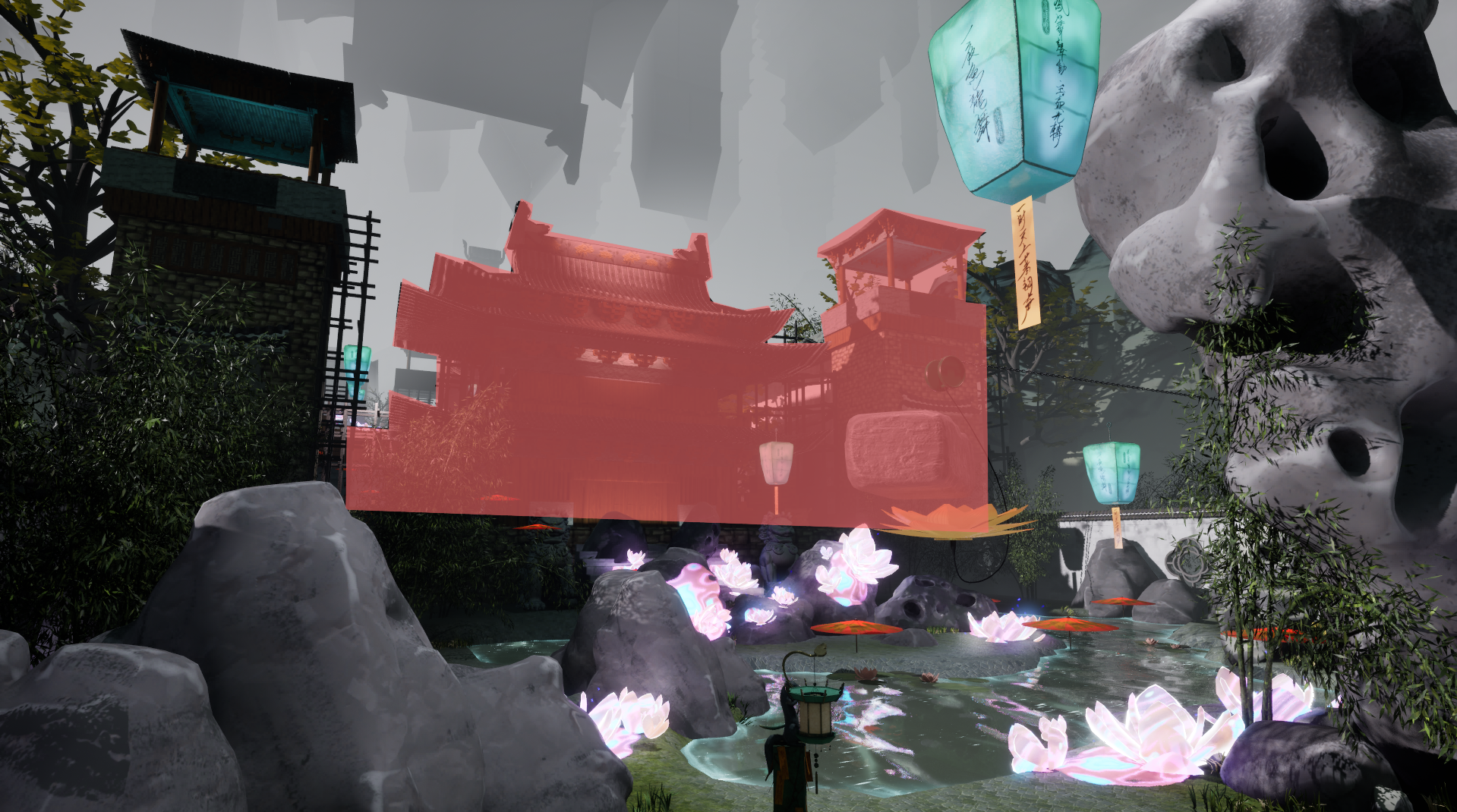
Early MITIGATIONS: SIGHTLINES
Since Chinese shrines tend to be very linear and rectangular, long sightlines became an issue during early blockouts.
To mitigate this, we raised the walls in each section and tightened the entrances and exits. This chunked the level down to a consumable level.
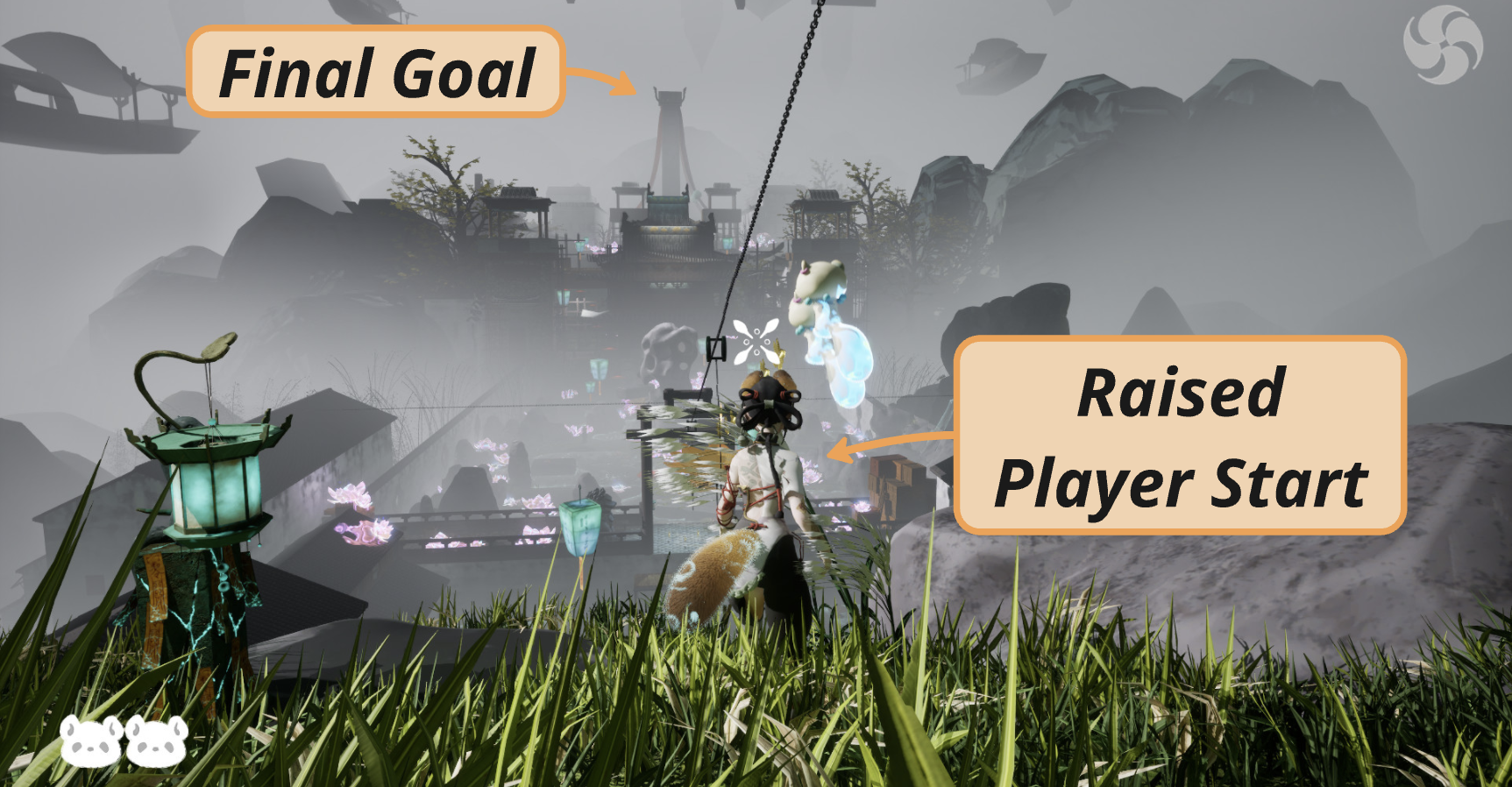
This created a new problem: the high walls blocked players from seeing their final goal - a large monument - from the level start.
After several iterations, we decided to raise the player start to a hilltop, and then adjusted the flow to force the player downwards into the main playable space.
primordial shrine
SAFE-FAILURE ZONES
As the tutorial is the first space the player is dropped into, the level begins in an open area where players can get a feel of the controls.
The first platforming challenge is presented without any harmful elements, so the player isn’t immediately punished for messing up.
TEACHING Possesion: COMBINING CINEMATICS AND DESIGN
Conveying the object-possession mechanic and its applications was the primary goal of the tutorial level.
Working with the cinematics team, I set up a simple scene that shows the idea of possession and then requires the player to replicate the action to advance.
conveying scale
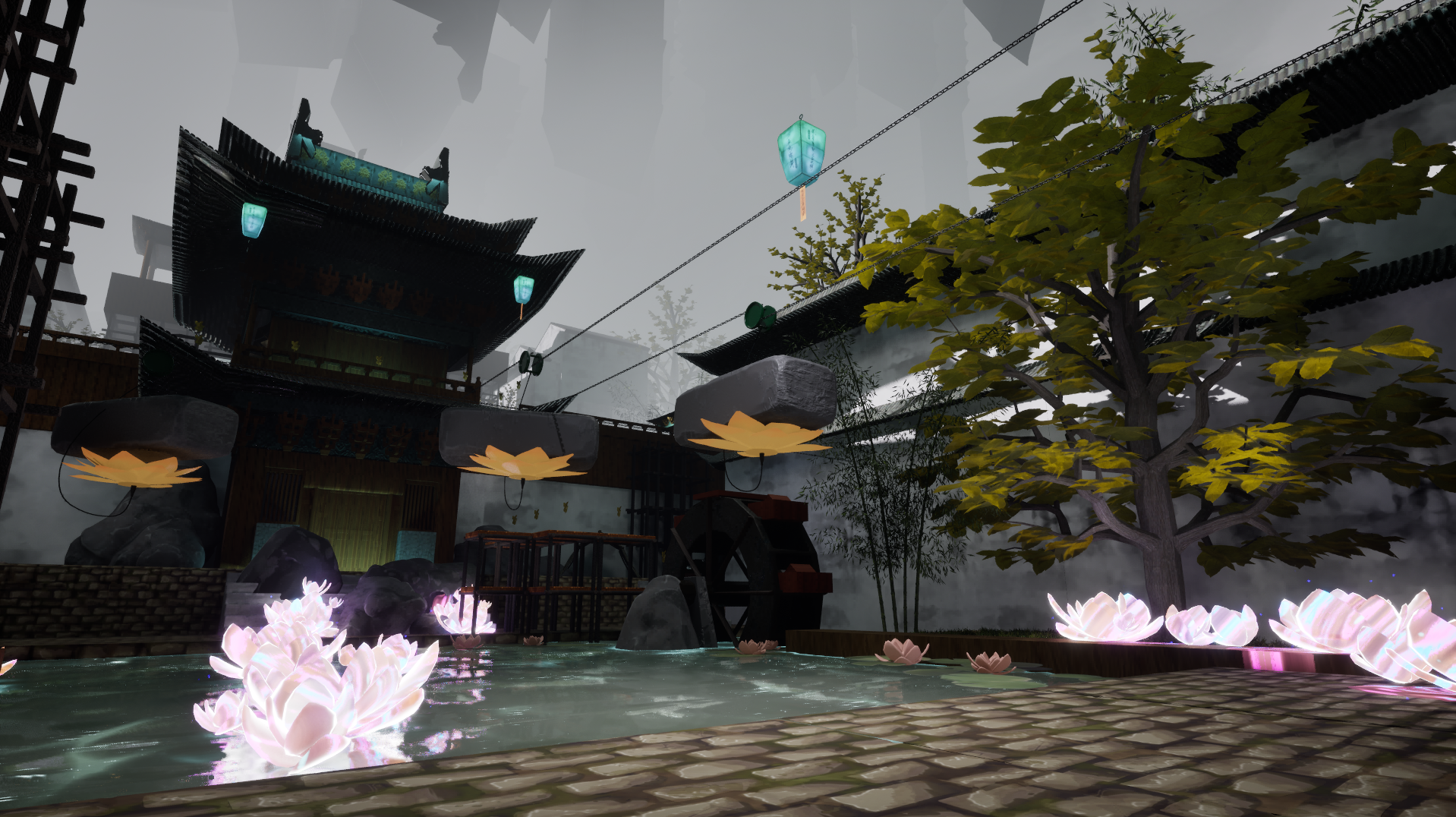
Ling’s setting is meant to feel populated - the villages are supposed to feel vast.
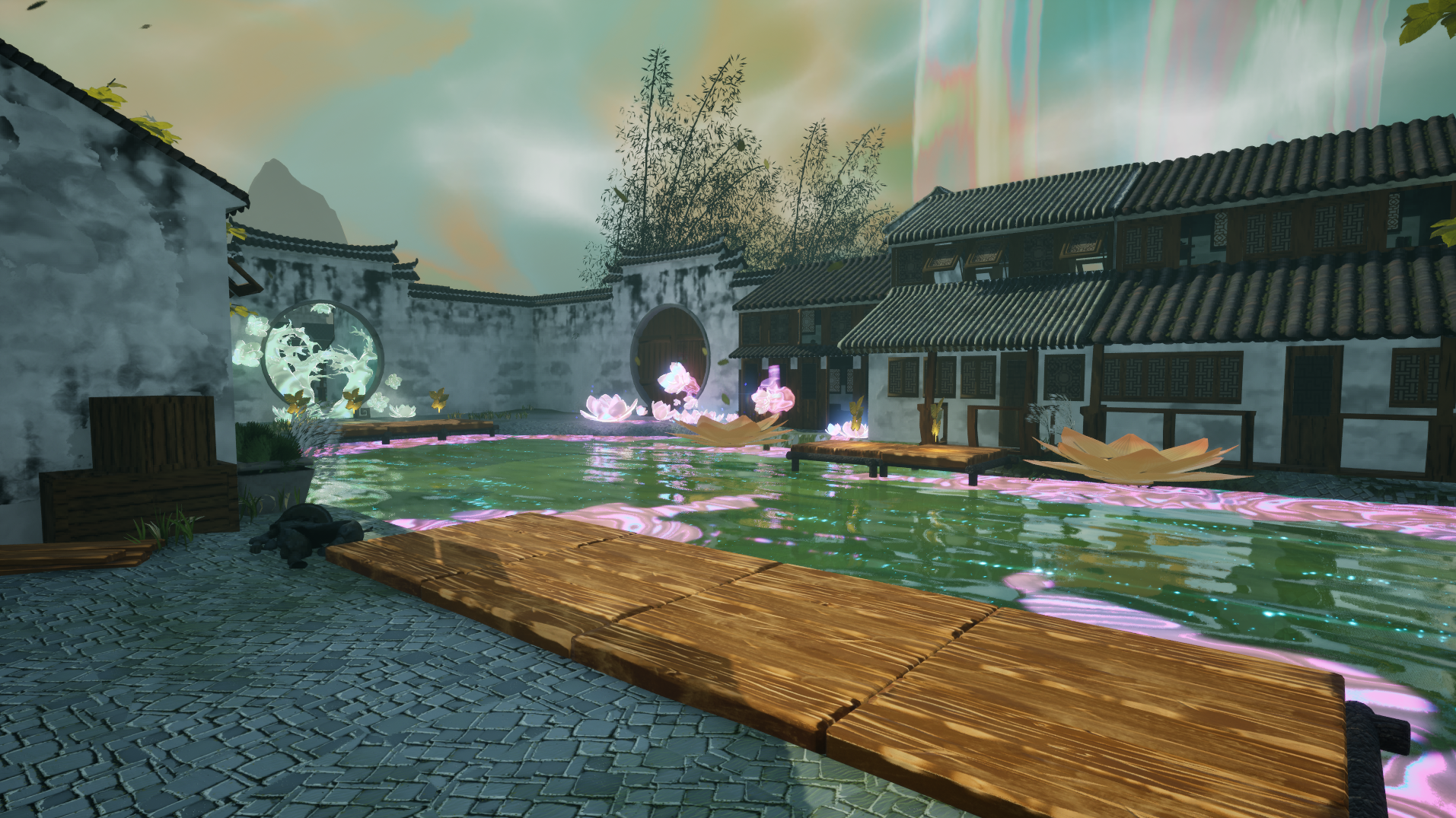
By carefully managing sightlines, I created midground areas that implied a larger settlement than what was visible.
teach, reinforce, master
From there, other mechanics are introduced that require possession. The player is simultaneously learning new skills while reinforcing old ones.
Design Process
Tutorial
2D map
2D map
gallery
postmortem
What Went Well
Conveyance: Consistent color language was key throughout Ling. I was able to communicate to players where to go via color contrast, like with the red umbrellas.
Level pacing: Both levels varied the gameplay moments to minimize repetition, despite the game’s small amount of mechanics. Shrine was especially successful in this regard.
Immersion: I expanded the levels beyond the playable space by creating a dense midground and background. This supported the art and narrative direction, resulting in two levels that felt grounded in our world.
What needs improvEMENT
Platforming depth: Shrine’s most significant drawback was its lack of gameplay identity - the platforming didn’t feel different from other levels. Leveraging terrain sculpting more would’ve resulting in more unique challenges.
Verticality: Use of vertical space was a constant challenge. Changes to mechanics, Ling’s movement, and overall game direction during later milestones caused my levels to feel flatter than they could have.
Conveying danger: The tutorial level lacks an obvious introduction for the lethality of water and flowers. While I did create sections with the intention of teaching the player that they’re dangerous, these moments could be improved through more explicit direction.
Even Better If…
Better collision: Several collision-related issues were discovered in the weeks near launch. Although many of them were fixed, players will still find some invisible walls or strange slopes that aren’t intuitive.
Wider variety of assets: Due to time constraints, the game shipped with a small number of unique assets. More textures, modkits, and props to fill our spaces would help differentiate the levels further.
More narrative: All of the game’s narrative beats occur in the hub - outside of the main levels. If given the opportunity, I’d love to add stronger storytelling elements inside the core gameplay spaces.
image credit
Steam icon: “Steam icon - free download png & SVG | streamline,” streamline, https://www.streamlinehq.com/icons/download/steam--31088 (accessed Jul. 16, 2025).
Website icon:
Chinese Shrine Concept: